


Thread Gages
Accurate thread verification matters whenever parts must assemble smoothly, maintain fit, and meet inspection requirements across production or incoming quality control. In machining, toolmaking, and precision component manufacturing, the right gaging method helps confirm whether a thread form stays within tolerance without slowing down the workflow.
Thread Gages in this category support practical thread inspection tasks, from checking external thread dimensions to setting up comparative measurements with high repeatability. The range shown here is especially relevant for users who need dependable shop-floor or inspection-room tools for metric thread control, calibration-supported measurements, and consistent pass/fail evaluation.
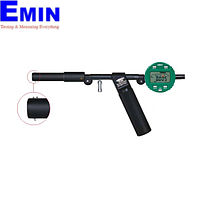
Where thread gages fit in precision measurement
Thread inspection is different from general dimensional measurement because the result depends on the relationship between pitch, flank angle, effective diameter, and contact behavior. A small deviation can affect assembly performance, sealing, or load distribution, even when a nominal diameter appears correct.
That is why thread gages are widely used alongside other metrology tools rather than as a substitute for them. For preliminary checks, users may also work with a pitch gage to identify thread pitch, then move to more precise inspection with comparative or direct measuring methods depending on the tolerance and process stage.
Typical tools available in this category
This category includes several styles of thread measuring solutions, with a strong emphasis on indicating thread snap gages and thread measurement accessories for micrometer-based inspection. These tools are suitable for production environments where repeatability, quick handling, and stable measuring force are important.
A clear example is the range from Mahr, which includes indicating thread snap gages in different measuring ranges such as 0-25 mm, 0-30 mm, 0-40 mm, 45-85 mm, 50-100 mm, 60-100 mm, 100-150 mm, and 150-200 mm. Models like the Mahr 4453000KAL, 4451000DKS, 4452000DKS, and 4510001DKS illustrate how the category supports both smaller and larger workpieces while focusing on controlled, comparative thread inspection.
For users working with the three-wire method, the MITUTOYO 313-101 Thread Measuring Set is another relevant option. This set is intended for micrometer spindle diameter 6.35 mm and includes multiple wire sizes, making it useful when measuring effective thread diameter using a proven manual technique.
Comparative gaging and the three-wire method
Two common approaches appear naturally in this category. The first is comparative thread gaging, often performed with indicating snap gages. This method is well suited to repetitive inspection because the operator can check threaded parts quickly and monitor variation with very fine repeatability.
The second is the three-wire method, where calibrated wires are placed in the thread and measured with a micrometer. A product such as the MITUTOYO 313-101 set supports this approach across a wire diameter range from 0.17 to 3.2 mm, which is useful when thread geometry requires careful setup. In practice, the choice between these methods depends on throughput, tolerance level, operator skill, and whether the task is setup, in-process inspection, or final verification.
How to choose the right thread gage
The first selection point is the application range. A gage intended for 0-25 mm work is not interchangeable with one designed for 100-150 mm or 150-200 mm parts, so the actual thread size window should be checked first. This is especially important in production lines that run multiple families of parts.
The second point is the inspection method and required sensitivity. Indicating thread snap gages are often chosen when fast comparative checks are needed and the process benefits from repeatable measuring force and low operator influence. Models in this category show repeatability figures down to 1 µm in several versions, which makes them suitable for controlled measurement tasks where consistency matters.
Another factor is certification and calibration preference. Some Mahr models in this selection are supplied with DAkkS calibration certificates, while others are listed with Mahr factory calibration certificates. For users building a traceable inspection workflow, this detail can influence purchasing decisions just as much as measuring span or contact geometry.
Examples across different measuring needs
Smaller thread ranges may call for compact indicating gages such as the Mahr 4453000KAL (840 E, 0-25 mm) or Mahr 4451000DKS (840 FH, 0-30 mm). These are relevant where finer measuring behavior and frequent bench or station use are part of the inspection process.
For mid-range applications, models such as the Mahr 4450002DKS (840F, 50-100 mm), Mahr 4455002DKS, and Mahr 4455002KAL (both 840 FS, 60-100 mm) provide coverage for larger threaded components while maintaining comparative measurement capability. At the larger end, the Mahr 4455003DKS, 4455003KAL, and 4455004 support inspection up to 200 mm application ranges.
If thread verification requires setup masters or matching reference tooling, related products such as a setting ring may also be useful in the broader inspection workflow. For checking diameters, hole conditions, or supporting dimensional confirmation around the threaded feature, a pin gauge can also complement thread inspection tasks.
What to pay attention to in day-to-day use
Even a high-quality thread gage performs best when it is matched correctly to the thread form, size range, and inspection routine. Users should pay attention to contact condition, measuring force, cleanliness of the threaded part, and whether the instrument is intended for direct dimensional evaluation or comparative checking against a known reference.
It is also good practice to consider the working environment. Shop-floor use may prioritize speed and rugged handling, while laboratory or final inspection may place more emphasis on calibration documentation and tighter control of measurement conditions. The products in this category reflect those practical differences through variations in range, span, and certification type.
Thread gages for consistent quality control
When thread quality affects assembly reliability, rework costs, or customer acceptance, selecting the appropriate gaging method becomes a critical part of process control. This category brings together thread inspection tools from established manufacturers, especially Mahr and MITUTOYO, with options that support both high-repeatability comparative gaging and micrometer-based three-wire measurement.
Whether the requirement is quick in-process checks or more controlled thread measurement with calibration support, reviewing the measuring range, inspection method, and certification details will help narrow the right solution. A well-matched thread gage improves inspection efficiency while giving operators and quality teams more confidence in the finished thread.
-
-
-
-
-
-
-
-
-
-
-
-
-
-
-
-
-
-
-
-
-
-
-
-