


Setting ring
Accurate bore and diameter verification depends on having a reliable reference standard in the inspection process. In many machining, toolroom, and metrology workflows, setting rings are used to establish a known dimension before checking parts, calibrating comparative instruments, or confirming measurement repeatability across a production batch.
On this page, you can explore setting ring products used in precision measurement environments, along with related reference items for dimensional control. These standards are especially relevant when traceable setup, consistent inspection practice, and stable measurement conditions matter in day-to-day industrial use.
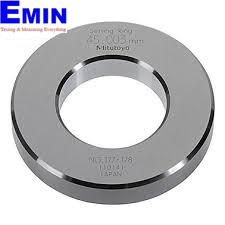
Why setting rings matter in dimensional inspection
A setting ring provides a known internal diameter that can be used as a reference standard for setting or checking measuring instruments. In practical terms, it helps technicians verify that a comparative bore measurement setup is aligned correctly before the actual workpiece is inspected. This reduces uncertainty caused by instrument drift, operator variation, or repeated setup changes.
They are commonly used in quality control rooms, calibration benches, and production inspection stations where bore size or internal diameter must be confirmed with confidence. In broader metrology workflows, they also complement other dimensional standards such as pin gauges and reference masters used for feature-specific checks.
Typical uses of setting rings in industry
Setting rings are often selected when the inspection task requires a stable, repeatable master for internal size verification. They may be used to preset measuring tools, validate a comparator setup, or support routine checks in production environments where the same nominal sizes are inspected frequently.
They are especially useful in machine shops, automotive component manufacturing, precision turning, grinding operations, and general mechanical inspection. When internal diameters must be checked quickly without sacrificing consistency, a dedicated ring standard can simplify the process and help standardize measurement procedures between shifts or between operators.
Available product examples in this category
This category includes both individual and set-based reference items from established metrology manufacturers. For example, the MITUTOYO 177-285 Setting Ring (Ø18mm) represents a single-size steel reference ring suitable for setups where one nominal diameter is used repeatedly.
For users who need multiple sizes in one range, Niigata Seiki offers several practical sets. Examples include the RG-1S set covering smaller diameters from 1 to 10 mm, the RG-2S set extending into 24 mm, and larger grouped ranges such as RG-4S, RG-5S, RG-6S, and RG-7S. The category also includes corresponding Niigata Seiki steel ring gauge sets such as RG-4, RG-5, RG-6, and RG-7, which are relevant when a workshop needs a broader collection of standard sizes rather than a single reference ring.
How to choose the right setting ring
The first step is matching the nominal size to the instrument setup or inspection routine you need to support. A single ring is often appropriate for repetitive checks at one diameter, while a set can be more efficient for workshops handling multiple bore sizes or varied part families. Range planning is important because it affects both workflow speed and the number of standards required at the bench.
Material and dimensional stability also matter. In this category, several examples are steel-based standards, which are commonly used for robust shop-floor and laboratory reference applications. If your process involves regular comparative setup across multiple dimensions, it can also be useful to review adjacent categories such as standard balls or other master standards that support different geometries.
Single rings vs. ring gauge sets
A single setting ring is usually the better fit when one diameter is checked repeatedly, such as in dedicated fixtures, recurring production programs, or inspection cells focused on a narrow family of parts. It keeps the reference simple and can help streamline setup for operators who need a fast, repeatable starting point.
A multi-piece set is more suitable when your inspection requirements change frequently. Sets like Niigata Seiki RG-1S through RG-7S cover grouped nominal sizes, making them practical for maintenance departments, metrology labs, or job shops that need flexibility across a wider measurement range. This format can reduce the need to source many separate reference pieces individually.
Brand options and measurement ecosystem
This category highlights products associated with manufacturers commonly recognized in industrial metrology, including Mahr, MITUTOYO, and Niigata Seiki. While the specific items shown here center on setting rings and ring gauge sets, brand selection often depends on existing inspection practices, preferred documentation standards, and compatibility with the measuring methods already used in your facility.
Setting rings are rarely chosen in isolation. They are part of a broader measurement ecosystem that may include masters for threads, balls, pins, and angular standards. If your inspection work also involves threaded features, it may be useful to compare with pitch gages to build a more complete dimensional inspection toolkit.
Good practice for handling and use
Because these items function as dimensional references, careful handling is important. Surfaces should be kept clean, protected from impact, and stored in a controlled manner to avoid unnecessary wear or contamination. Even a well-made standard can lose practical value if it is handled casually in a high-traffic production area.
It is also good practice to use the ring under appropriate temperature and cleanliness conditions, especially when measurement consistency is important. In many facilities, setting rings are integrated into documented inspection procedures so that setup, verification, and periodic checking follow the same routine every time.
Find the right reference standard for your inspection process
Choosing the right setting ring depends on how many nominal sizes you work with, how frequently instruments are set or checked, and how tightly your inspection process is controlled. Some users need one dedicated master such as the MITUTOYO Ø18 mm ring, while others benefit more from Niigata Seiki multi-size steel sets that support broader day-to-day measurement tasks.
By selecting a reference that fits your actual workflow, you can make instrument setup more consistent and improve confidence in internal diameter measurement. Browse the available products in this category to compare size coverage, format, and manufacturer options that align with your metrology requirements.
-
-
-
-
-
-
-
-
-
-
-
-
-
-
-
-
-
-
-
-
-
-
-
-