


Measuring Arm
Accurate reach, stable contact, and repeatable positioning are essential when checking dimensions on components that are difficult to access directly. In many inspection setups, a Measuring Arm helps extend a measuring point into recessed, stepped, or obstructed areas while maintaining the control needed for reliable mechanical measurement.
Within mechanical metrology, this type of accessory is especially useful when standard contact arrangements are not enough for the geometry of the workpiece. It supports more flexible inspection across machining, toolmaking, maintenance, and quality control environments where operators need dependable access without compromising measurement consistency.
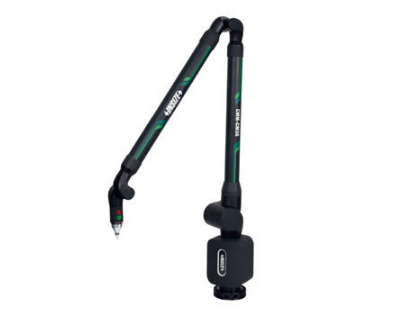
Where a measuring arm fits in mechanical measurement
A measuring arm is typically used as part of a broader contact-based measurement setup rather than as a standalone instrument. Its role is to provide the necessary reach or offset so that the measuring point can contact the target surface correctly. This becomes important when inspecting grooves, shoulders, internal features, or other locations where direct access is limited.
In practical use, the arm influences how force, alignment, and contact position are transferred during measurement. That is why selection should not be based on size alone. Users usually need to consider the measuring geometry, available space around the part, and compatibility with the instrument or measuring arrangement already in place.
Common applications in workshops and inspection rooms
Measuring arms are often chosen for tasks where the operator must bridge a gap between the instrument and the feature being checked. Examples include parts with deep steps, narrow access points, or surfaces located behind edges that interfere with direct measurement. In these cases, the arm helps create a more practical and repeatable measuring path.
They are also relevant in environments where different mechanical instruments are used side by side. For example, inspection teams that already work with callipers for quick dimensional checks or dial indicators for comparative measurement may also need a measuring arm when access to the target point becomes the main limitation rather than the instrument itself.
Key selection factors before ordering
When comparing options, the first point is usually throat depth or effective reach. This affects whether the arm can physically access the required measuring area without interference from the surrounding part geometry. A mismatch here can make an otherwise suitable setup impractical in daily use.
The second point is mechanical stability. An arm should support controlled contact without introducing unnecessary deflection or awkward positioning. For precision work, users should also review how the arm fits into the full measuring chain, including mounting method, measuring direction, operator handling, and the type of feature being checked.
It is also helpful to think in terms of workflow. If a site regularly inspects thin materials, a dedicated thickness meter may be more efficient for that specific job, while a measuring arm is better suited to situations where access geometry is the real challenge.
Representative product in this category
A notable example in this range is the Mahr 4503027 Measuring Arm (844 Te, 100 mm). Based on the available product information, this model features a throat depth of 100 mm, making it relevant for applications where extra reach is needed to contact features located away from the edge of the workpiece.
For buyers already standardizing on Mahr equipment, choosing a measuring arm from the same manufacturer can help simplify sourcing and support compatibility across inspection processes. As with any accessory used in precision measurement, the right choice depends on the actual part geometry and measuring method, not only on nominal dimensions.
How measuring arms support better inspection results
The value of a measuring arm is not only in extending reach but also in improving measurement accessibility. When the operator can approach the measuring point more naturally, it becomes easier to reduce setup compromises, awkward positioning, and inconsistent contact. Over time, that can contribute to smoother inspection routines and more reliable day-to-day use.
This is particularly relevant in production and maintenance settings where measurement is repeated across multiple similar parts. A well-matched arm can help standardize the measuring position, reduce handling difficulty, and make inspection less dependent on operator improvisation.
When to use a measuring arm instead of another instrument
Not every dimensional task requires this type of accessory. If the feature is easy to access, a direct-reading instrument may be the simpler choice. For external dimensions, operators may rely on micrometers or other comparative tools depending on the required precision and method. In more advanced form analysis, a dedicated roundness measuring machine serves a very different purpose focused on geometric evaluation rather than reach extension.
A measuring arm becomes most useful when the primary challenge is contact access inside a mechanical measurement process. In that sense, it is best understood as a practical enabling component within a wider inspection system.
Choosing with the application in mind
For B2B purchasing, the most effective approach is to start with the workpiece and the measurement point. Consider how far the target feature is from the edge, how much clearance is available, and how the operator needs to approach the surface. These factors often determine whether a given arm length or throat depth will work in practice.
If your inspection process involves repeated checks on parts with difficult-to-reach features, a suitable measuring arm can make the setup more efficient and easier to reproduce. Reviewing available models in context with your existing instruments, measuring fixtures, and inspection routine will usually lead to a better fit than selecting by dimension alone.
Used in the right application, a measuring arm adds flexibility to mechanical inspection without changing the core measurement method. It is a straightforward but important component for reaching challenging features, improving usability, and supporting more consistent results across routine dimensional checks.
-
-
-
-
-
-
-
-
-
-
-
-
-
-
-
-
-
-
-
-
-
-
-
-