


Level, Angle And Straightness Measuring Instrument
Accurate setup work depends on more than just basic dimensions. In machining, fabrication, installation, and maintenance, technicians also need reliable control of level, angle, and straightness to keep assemblies aligned, surfaces true, and components within tolerance. This is where the Level, Angle And Straightness Measuring Instrument category becomes especially useful for both workshop and field applications.
On this page, you can find instruments used to check horizontal and vertical alignment, verify angular positioning, and assess straightness during inspection or setup. The range includes practical workshop tools as well as more precise mechanical and digital solutions suited to engineering, maintenance, and production environments.
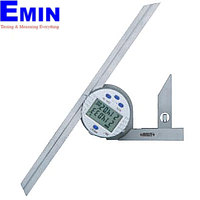
Where these instruments are commonly used
Level and angle measurement is a routine requirement in many industrial tasks. Engineers use these tools when aligning machine bases, checking fixture setup, confirming the flatness and straightness of reference surfaces, or verifying angular relationships before cutting, assembly, or final inspection.
They are equally relevant in maintenance and installation work. A spirit level or digital level can help position equipment correctly, while engineer’s squares and related tools support quick checks for squareness and alignment. In workshops where dimensional inspection is already handled with callipers or micrometers, these instruments add the geometric control needed for complete measurement workflows.
Typical product types in this category
This category covers several tool formats, each suited to a different measurement task. Traditional spirit levels and engineer’s levels are used to check horizontal or vertical alignment, while digital levels provide angle readings in degrees for faster setup and repeatability. Squares help confirm 90-degree relationships, and straightness tools support surface checking and layout work.
For example, the STANLEY STHT43118-8 Top Read Aluminum Level (300mm) is representative of compact manual level tools for day-to-day alignment jobs. For users who need numerical readings, models such as the MOORE & WRIGHT MW575-01DIP Digital Level and MW575-01WIP Digital Level illustrate how digital instruments can support faster angle verification, easier zero setting, and clearer readout during setup tasks.
Manual and digital options for different workflows
Choosing between manual and digital tools usually depends on how the measurement will be used. Manual levels and squares are straightforward, durable, and often ideal for general fabrication, site work, and routine inspection. They are easy to deploy, require minimal training, and remain practical where speed and robustness matter more than data visibility.
Digital tools are often preferred when operators need finer angular indication, easier comparison between positions, or faster repeat checks. Products such as the MOORE & WRIGHT MW580-02 Digital Level, MW580-01 Digital Laser Spirit Level, and MW570-01W Digital Mini-Mag Level show the variety available, from compact magnetic formats to larger digital level designs for more controlled positioning work.
Where a shop also performs comparative movement checks or machine setup verification, users may pair these instruments with dial indicators to evaluate alignment and deviation more closely.
Examples of tools used for squareness and straightness checks
Not every job calls for a digital display. In many workshops, classic mechanical tools remain the first choice for checking geometric relationships quickly and consistently. The STANLEY 46-012 Combination Square and STANLEY 46-536 Try Square are good examples of tools used for marking, checking squareness, and verifying setup conditions during fabrication or assembly.
For engineering inspection tasks, the MOORE & WRIGHT 4004 Traditional Engineers' Square offers a more inspection-oriented approach to right-angle verification. Meanwhile, tools such as the MOORE & WRIGHT ELM Engineers Level and MOORE & WRIGHT MW550-03 Engineers Level are better suited to precision leveling and straightness-related checks on machine elements, reference surfaces, or inspection setups.
The MOORE & WRIGHT MW900-07 can be understood as part of the broader straightness and surface-checking ecosystem, where technicians need practical tools to assess and refine contact surfaces during fitting or precision bench work.
How to choose the right instrument
The first selection factor is the measurement objective. If the task is basic horizontal or vertical leveling, a conventional spirit level may be sufficient. If the application involves machine setup, angular positioning, or inspection records, a digital level with defined resolution and accuracy may be more appropriate.
The second factor is the working environment. Compact tools are useful in tight spaces or mobile maintenance work, while longer bodies may provide better stability on larger surfaces. Features such as magnetic bases, top-read designs, or IP-rated construction can also matter depending on whether the tool is used on machinery, structural frames, or in harsher industrial conditions.
It is also worth considering how this category fits into the wider inspection process. For example, users checking form and geometry may also review tools such as a thickness meter or other mechanical measuring instruments where material condition and dimensional verification are part of the same workflow.
Brands commonly considered by industrial buyers
Brand preference in this category often comes down to familiarity, required precision, and the type of application. On this page, products from MOORE & WRIGHT and STANLEY are especially relevant based on the representative models available. MOORE & WRIGHT is closely associated with traditional engineering measurement tools as well as digital level solutions, while STANLEY is widely recognized for practical workshop measuring tools.
Depending on procurement standards or broader tooling preferences, buyers may also compare options across other established industrial brands available in the wider catalog. The most suitable choice is usually the one that matches the required level of accuracy, the inspection method, and the working conditions rather than brand name alone.
Why these tools matter in a complete measurement system
Dimensional control is only one part of quality assurance. A component may measure correctly in length or diameter but still fail in assembly if it is not level, square, straight, or set at the intended angle. That is why these instruments remain important across machining, toolroom work, maintenance, metalworking, and general industrial inspection.
Used together with other measuring tools, they help reduce setup errors, improve repeatability, and support more reliable installation and inspection decisions. In precision environments, even simple checks with the right level or square can prevent misalignment from becoming a costly downstream issue.
Final considerations before ordering
When reviewing this category, it helps to start with the actual inspection task: checking level, confirming an angle, verifying squareness, or assessing straightness on a reference surface. From there, users can narrow the choice by format, readability, handling, and the level of precision needed for the job.
If you are building or upgrading an industrial inspection toolkit, this category provides a practical foundation for geometric measurement beyond basic dimensions. Selecting the right instrument for alignment, angle verification, or straightness control can make setup work more efficient and inspection results more dependable.
Types of Level, Angle And Straightness Measuring Instrument (1,443)
- Angel (271)
- Protractor (353)
- Spirit Level (618)
- Straight (201)
-
-
-
-
-
-
-
-
-
-
-
-
-
-
-
-
-
-
-
-
-
-
-
-