


Hardness tester
Material hardness testing plays a central role in quality control, incoming inspection, maintenance, and product development. Whether the task is checking heat-treated steel, comparing alloy consistency, or verifying rubber and plastic properties, the right instrument helps teams make faster decisions with more confidence. On this page, you can explore a broad range of hardness tester solutions for industrial and laboratory use.
These instruments are used across metalworking, fabrication, machining, plastics, elastomers, and general manufacturing. Depending on the material, workpiece size, access conditions, and required test method, users may need an ultrasonic unit, a Leeb handheld model, a Shore durometer, or supporting accessories such as certified test blocks.
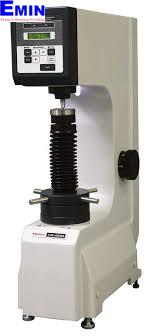
Choosing the right hardness testing method
Not all hardness measurement tasks are the same. In practice, selection usually depends on the material type, surface condition, part geometry, and whether testing must be performed in the lab, on the shop floor, or directly on installed equipment. A portable instrument can be useful for field inspection, while a more specialized method may be preferred when tighter process control is required.
For metallic materials, users often compare results in scales such as HRC, HB, HV, or HL. For rubber, elastomers, and some plastics, Shore A or Shore D is typically more relevant. If your inspection process also includes dimensional checks, related tools such as thickness meters can help build a more complete material verification workflow.
Main product types within this category
This category covers multiple hardness testing approaches rather than a single device format. Ultrasonic hardness testers are often selected for portable measurements on metal parts where a compact probe and surface access are important. They can be suitable for weld zones, finished components, and applications where a lower test force footprint is beneficial.
Leeb and handheld hardness meters are widely used for mobile testing on larger or heavier metal workpieces. Their portability makes them practical for maintenance teams, fabrication shops, and incoming inspection. For non-metal materials, Shore durometers remain a common choice for evaluating the hardness of rubber-like compounds and plastics using standardized indentation principles.
Supporting items also matter. Test blocks are used to verify instrument performance and support routine checks before measurement. In this area, users looking for calibration and reference accessories may also consider solutions from KERN, especially where periodic validation is part of the inspection process.
Representative instruments and use cases
Several products in this range illustrate how hardness testing requirements vary by application. The MOORE & WRIGHT MWT-3200 is a motorised ultrasonic hardness tester designed for multi-scale metal hardness measurement, while the MWT-3250 manual ultrasonic version offers a similar portable approach with a manual test probe. These types of instruments are often considered when users need flexibility across scales such as Vickers, Rockwell, and Brinell in one platform.
For handheld Leeb testing, the MOORE & WRIGHT MWT-3100 supports portable measurement in HLD and is suited to field-oriented inspections on common metallic materials. In the PCE range, the PCE 2550-ICA and PCE 2000N-ICA provide portable hardness measurement with data storage and calibration-oriented supply configurations, making them relevant for traceable inspection routines.
Where the material is rubber or plastic, Shore durometers such as the PCE DDA 10, PCE DDA 10-ICA, PCE DX-AS-ICA, and PCE DDD 10-ICA provide more appropriate testing than metal-focused methods. Shore A models are commonly used for softer elastomeric materials, while Shore D is more suitable for harder plastics and similar materials. If broader brand options are needed in adjacent measurement workflows, users may also explore MITUTOYO for precision measurement equipment.
What to consider before buying a hardness tester
A good starting point is the material itself. Steel, cast steel, stainless steel, cast iron, aluminum alloys, brass, bronze, rubber, and plastics do not all respond to the same test method. The hardness scale required by your specification or customer drawing should guide the selection first, followed by portability, probe access, and expected measurement throughput.
Another important factor is part size and surface condition. Some portable methods work better on larger, sufficiently rigid components, while others are more appropriate for localized measurements or finished surfaces. Data storage, averaging functions, display readability, rechargeable power options, and support for common standards can also matter in day-to-day industrial use.
For buyers comparing multiple inspection tools, hardness testing is often only one part of the process. Shops that also verify size, runout, or wall section may combine these instruments with dial indicators or other mechanical measuring devices depending on the production stage.
Calibration, verification, and measurement reliability
Reliable results depend not only on the instrument but also on proper verification practice. Test blocks are commonly used to confirm that the device is performing within expected limits before routine measurements begin. This is particularly important in environments where results are recorded for quality documentation, supplier acceptance, or maintenance history.
Some products in this category are supplied with calibrated reference pieces or ISO calibration certificates, which can help support documented quality systems. Even with these features, users should still follow the appropriate test procedure, use the correct impact device or indenter type, and account for material-specific conversion limits when comparing hardness scales.
Applications across manufacturing and maintenance
Hardness testing is used in many practical scenarios: checking heat treatment outcomes, verifying incoming raw materials, inspecting cast or machined components, evaluating coatings support materials, and monitoring wear-sensitive parts during maintenance. Portable devices are especially valuable when large workpieces cannot be moved easily to a fixed bench tester.
In polymer and elastomer production, Shore measurement helps confirm product consistency for seals, rollers, molded parts, and soft industrial components. In metalworking, ultrasonic and Leeb methods can support faster checks on production parts, structural components, or service-exposed equipment where rapid screening is more practical than destructive sampling.
Find a tester that matches your inspection workflow
The most suitable solution depends on how and where measurements are taken, which hardness scales are required, and how your team documents results. This category brings together portable metal hardness testers, Shore durometers, and verification accessories so buyers can compare methods based on real application needs rather than product names alone.
If you are selecting equipment for production, maintenance, or lab use, focus on the test method, supported scales, material compatibility, and verification requirements first. That approach makes it easier to narrow down the right hardness tester for repeatable, practical measurement in your working environment.
Types of Hardness tester (1,955)
- Barcol Hardness tester (29)
- Brinell Hardness tester (158)
- Fruit hardness tester (19)
- Leeb and Handheld Hardness meter (268)
- Rockwell Hardness tester (260)
- Shore Hardness Tester (307)
- Standard block for hardness tester (294)
- Superficial Rockwell Hardness Tester (30)
- Ultrasonic hardness tester (55)
- Universal Hardness Tester (75)
- Vicker Hardness tester (372)
- Webster Hardness tester (70)
- Wood Hardness Tester (6)
-
-
-
-
-
-
-
-
-
-
-
-
-
-
-
-
-
-
-
-
-
-
-
-