


Compass
Accurate layout and comparison work still relies heavily on simple hand tools that are fast to position, easy to read, and dependable on the shop floor. In machining, fabrication, maintenance, and inspection tasks, Compass tools are widely used to transfer dimensions, compare internal or external sizes, and mark arcs or circles before cutting or finishing.
Within mechanical measuring instruments, this category covers practical tools such as inside calipers, outside calipers, divider calipers, and selected dial or digital variants for more refined comparison work. They are especially useful when operators need a quick mechanical reference point before moving to higher-resolution instruments such as callipers or other precision gauges.
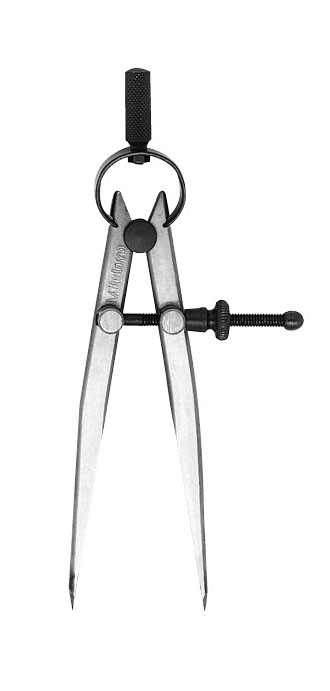
Where compass tools fit in mechanical measurement
Unlike direct-reading instruments that display a dimension immediately, compass-style tools are commonly used for comparison measurement and marking-out. An outside caliper helps compare external diameters or widths, while an inside caliper is used for bores, slots, and internal gaps. Divider types are often selected for stepping off equal distances, scribing circles, and transferring repeated spacing onto a workpiece.
This makes them valuable in workshops where durability, speed, and operator feel matter. They are often used during setup, fitting, repair work, and general metalworking, particularly when measuring access is limited or when a quick transfer to a rule, micrometer, or reference surface is more practical than direct digital readout.
Main product types in this category
The category includes several tool forms that serve different tasks. Outside calipers are suited to shafts, turned parts, pipe diameters, and external dimensions. Inside calipers are used for hole diameters, recesses, and internal widths. Divider calipers are closer to marking tools, helping users scribe arcs, circles, and repeated pitch distances on metal surfaces.
For users who need greater sensitivity in bore comparison, inside dial caliper gages are also relevant. Models such as the METROLOGY IC-9035, IC-9055, IC-9075, and IC-9095 illustrate how this category can extend from traditional spring calipers to dial-based tools with fine graduation for checking internal ranges. In applications where even tighter dimensional control is required, users may also compare results with Panme instruments for more direct precision measurement.
Typical examples from the current range
Several representative products help show the breadth of this category. The MOORE & WRIGHT MW-524P Outside Calipers (100mm / 4") and MW-514P Inside Calipers (100mm / 4") are straightforward mechanical tools designed for everyday shop use. Their powder-coated steel construction supports durability in routine handling, making them suitable for general comparison tasks in production and maintenance environments.
For layout and marking work, the MOORE & WRIGHT 504 Divider Calipers (100mm / 4") offer a more specialized format. With hardened points, a bow spring for consistent tension, and a central adjustment screw, this type of tool is useful when repeated spacing or controlled scribing is required. For larger manual measuring tasks, Niigata Seiki IC2-300 Inside Caliper and Niigata Seiki OC2-300 Outside Caliper (300mm) show how longer-leg tools can support larger components and wider openings.
Where a digital format is preferred, the MOORE & WRIGHT MW442-03DC, MW442-04DC, and MW442-05DC external digital calipers demonstrate another step in the measuring workflow. These models are intended for external comparison over defined ranges and offer fine resolution, which can be helpful for users who want a more readable result while still working within the caliper-style form factor.
How to choose the right compass for your application
The first decision is whether the task involves an internal feature, an external feature, or a marking operation. For bores and internal gaps, choose an inside caliper or inside dial caliper gage. For shafts, outside diameters, and part thickness comparisons, an outside caliper is more appropriate. If the goal is to scribe circles or transfer repeated spacing, a divider is usually the better tool.
Next, look at working range and leg length. The effective size of the tool should match the component dimensions you handle most often. A compact 100 mm tool may suit bench work and smaller machined parts, while 300 mm models are more practical for larger fabrication or maintenance jobs.
Material and adjustment style also matter. Polished tool steel, hardened points, spring tension, and stable screw adjustment all contribute to repeatability and service life. If your process requires easier value reading rather than simple transfer measurement, a dial or digital version may reduce operator interpretation time.
Common applications in workshop and inspection environments
Compass tools are used across many stages of part preparation and checking. In fabrication, they help mark arcs, transfer distances from drawings, and check dimensions before drilling or cutting. In turning and machining, they are often used to compare external diameters or bore sizes quickly before confirming the final value with a higher-precision instrument.
They are also useful in maintenance and repair settings, where a technician may need to compare worn parts, check internal clearances, or reproduce an existing dimension without setting up a more complex measuring process. In broader inspection workflows, they often complement tools such as dial indicators when dimensional verification is part of alignment, runout, or fit evaluation.
Why manufacturer and build quality matter
Even for simple mechanical tools, consistent manufacturing quality affects how smoothly the legs move, how well the setting holds, and how repeatable the comparison feels in use. This category includes recognized names such as MOORE & WRIGHT, Niigata Seiki, and METROLOGY, each relevant to different measuring needs within the compass and caliper tool family.
The wider brand landscape for mechanical measurement can also be important for buyers standardizing suppliers across multiple instrument types. Depending on project requirements, many industrial users also evaluate measuring solutions from MITUTOYO and other established manufacturers when building a complete inspection toolkit.
Practical buying considerations for B2B users
For purchasing teams, maintenance departments, and quality personnel, the right selection usually depends on use frequency, target workpiece size, and the level of reading precision needed. A robust mechanical caliper may be sufficient for routine comparison and marking, while dial or digital versions may be a better fit where faster interpretation and finer resolution are needed.
It is also worth considering whether the tool will be used mainly in production, toolroom, maintenance, or incoming inspection. The environment influences the best balance between simplicity, toughness, and measurement sensitivity. Choosing the correct type from the start helps reduce handling errors and supports a smoother workflow from layout through final verification.
Finding the right compass for your measuring workflow
This category is best understood as a practical set of tools for transferring, comparing, and marking dimensions in everyday mechanical work. From classic inside and outside calipers to divider styles and more sensitive dial or digital variants, the available range supports both traditional workshop tasks and more controlled inspection routines.
If you are selecting a compass tool for internal measurement, external comparison, or layout marking, focus on the feature type, size range, and adjustment style that best match your application. A well-chosen tool will fit naturally into the rest of your measuring setup and work effectively alongside callipers, micrometers, and other mechanical inspection instruments.
-
-
-
-
-
-
-
-
-
-
-
-
-
-
-
-
-
-
-
-
-
-
-
-