


抹刀、勺子、铲子
Handling powders, granules, creams, and small-volume samples in the lab often depends on simple tools that are easy to overlook. In daily workflows, the right transfer utensil helps improve cleanliness, reduce product loss, and make sampling more consistent across research, QC, and production environments. This is especially important when working with sensitive materials, sterile processes, or small batch quantities.
Spatulas, Spoon, Scoops in this labware range support common tasks such as transferring solids, taking representative samples, scraping residues from containers, and portioning material during preparation or inspection. The category includes practical formats for routine bench work as well as disposable and sterile options for applications where contamination control matters.
Designed for controlled material handling in laboratory workflows
Laboratory spatulas and scoops are used wherever material needs to be moved accurately from one point to another. That may involve taking powder from a bottle, filling a weighing vessel, recovering product from a beaker wall, or collecting a sample for analysis. Although the task seems basic, utensil shape and material make a noticeable difference in control, hygiene, and ease of cleaning.
In practice, users may need a flat blade for scraping, a spoon end for sampling, or a combined spoon-spatula design for more flexible use. When paired with other bench consumables such as sample bags or transfer containers, these tools become part of a broader handling and preparation workflow rather than standalone accessories.
Common formats in this category
This category covers several familiar utensil styles used across laboratories and technical facilities. Flat spatulas are useful for lifting, spreading, or scraping solids from flat or curved surfaces. Spoon spatulas combine two functions in one tool, allowing users to scoop material on one side and manipulate or level it with the other.
Sample spoons and scoops are particularly relevant when small, repeatable portions are required. For example, the Burkle BK.5378.1011 Sample Spoon SteriPlast (2.5 ml) and Burkle BK.5378.1012 Sample Spoon SteriPlast (10 ml) illustrate how different scoop volumes can support different sample sizes. For broader bench work, products such as the Hammacher HA.HSN406.21 Spoon Spatula or Hammacher HA.HSN408.30 Spoon Spatula show the value of a dual-ended design in routine handling tasks.
Material choice: stainless steel, plastic, and rubber
The most suitable utensil material depends on the substance being handled and the hygiene requirements of the application. Stainless steel is commonly selected for durability, mechanical strength, and compatibility with repeated cleaning. A product such as the SciLab SL.Spa7103 Stainless-steel Blade Handy Knife/Spatulas is a good example of a rigid metal tool intended for general transfer and scraping tasks.
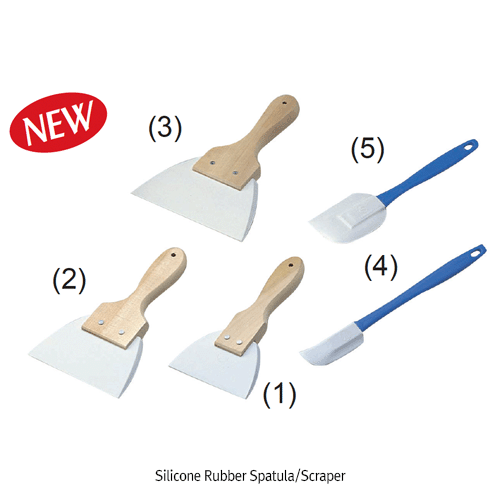
Plastic options are often preferred where single-use handling, light-duty sampling, or contamination control is more important than long-term reuse. In this category, Burkle disposable and sterile utensils, along with the Kartell KA.596 Spatula spoon 1.5ml l180mm, reflect that type of application. Rubber scrapers such as the SciLab SL.Spa6005 and SL.Spa6001 are useful when material needs to be recovered from vessel walls with less abrasion and better contact on smooth surfaces.
When sterile or disposable utensils make sense
Not every application requires a reusable tool. In microbiology, pharmaceutical preparation, food sampling, or other contamination-sensitive processes, disposable or sterile utensils can help simplify handling and reduce cross-contact risks between batches or samples. This is often valuable when cleaning validation is difficult, sample throughput is high, or the transferred material must remain isolated.
Examples in this category include the Burkle BK.5378.0010 Spatula LaboPlast, Burkle BK.5378.0009 Spatula LaboPlast, Burkle BK.5379.0009 Spatula LaboPlastBio, and the Burkle BK.5378.1032 Spoon-Spatula, Sterile. These options are suited to users who want a ready-to-use tool for one-time sampling or transfer without the turnaround time associated with washing and storage. For related preparation steps, some labs also combine these tools with products such as laboratory bowls when staging or portioning materials.
How to choose the right spatula or scoop
Selection usually starts with the material itself. Fine powders, sticky pastes, crystals, pellets, and viscous residues do not behave the same way, so the geometry of the tool matters. A flat blade may be enough for transferring powder from a weighing paper, while a spoon or scoop is better when sample retention is needed during movement.
Users should also consider tool length, scoop size, and whether the utensil needs to reach into narrow bottles or deeper vessels. If regular cleaning is expected, reusable stainless-steel designs from brands such as Hammacher or SciLab may be more practical. If traceability, single-use hygiene, or low-volume sampling is the priority, disposable lines from Burkle or plastic utensils from Kartell may be the better fit.
Representative brands and product examples
This category includes products from several established labware manufacturers, with options suited to different handling styles and operating preferences. Burkle is strongly represented with sterile sample spoons, disposable spatulas, and spoon-spatula formats that support clean and convenient sampling. Hammacher offers stainless-steel spoon spatulas for routine lab handling, while SciLab contributes both metal blade tools and rubber scrapers for transfer and recovery work.
These products are not interchangeable in every application, which is why the category is useful as a practical comparison point. A stainless-steel spoon spatula may suit repeated daily use on the bench, while a sterile plastic sample spoon is better aligned with controlled sampling protocols. Looking at the utensil form together with the process requirement is usually more effective than choosing based on material alone.
Where these tools fit in the wider labware setup
Spatulas, spoons, and scoops are typically used alongside weighing, storage, dispensing, and sample preparation items. They may support transfer into vials, containers, bowls, or temporary collection media depending on the workflow. In many cases, the efficiency of the overall task depends on choosing utensils that match the vessel opening, sample amount, and cleaning method.
For operations that also involve fluid handling or container dosing, nearby labware categories such as bottle top solvent pumps may be relevant in the same workspace, even though the application differs. Thinking in terms of the full bench process can help users select tools that improve consistency from sampling through preparation and transfer.
Practical buying considerations
For B2B purchasing, the best choice often depends on whether the tool will be used in routine laboratory work, regulated sampling, pilot production, or educational settings. Reusability, cleaning procedures, expected throughput, and the type of material all affect what makes sense operationally. Standardization can also matter when multiple technicians need the same tool style across benches or sites.
A well-chosen utensil helps reduce handling errors and supports cleaner, more repeatable work. Within this category, users can compare flat spatulas, spoon spatulas, sample spoons, and scrapers across stainless-steel, plastic, and disposable formats to find the most suitable option for their process.
-
-
-
-
-
-
-
-
-
-
-
-
-
-
-
-
-
-
-
-
-
-
-
-